
Hajj: A Pillar of Islam
Hajj is an Islamic and spiritual activity Muslims perform at the holy Masjid al-Haram in Makkah, Saudi Arabia. It stands as the fifth pillar of Islam, and the holy Quran obliges every Muslim capable of performing Hajj to do so once in their lifetime.
When is Hajj 2025?
Hajj begins on the 8th of Dhul Hijjah and lasts until the 13th of Dhul Hijjah, occurring during the same period each year. In 2025, Hajj is set to commence on the evening of Friday, June 6, and will end on the evening of Wednesday, June 11.
Significance of Hajj in Islam
As the fifth pillar of Islam, Hajj serves as a way of soul purification, cleansing the heart and bringing forth purity and hope. The Prophet Muhammad (SAW) said: The Messenger of Allah (SAW) said:
Whoever performs Hajj to this House (Ka`ba) ‚ he will come out as sinless as a newly born child.
Sahih al-Bukhari 1819
Therefore, it holds immense significance as an act of worship in Islam. Obligatory for financially and physically capable Muslims who meet certain conditions, Hajj involves completing specific rituals to please Allah (SWT). Those who complete the Hajj earn the title of Haji.
Key Locations in Hajj Pilgrimage
Makkah, the holiest site in Islam and the birthplace of Prophet Muhammad (SAW), houses many historical sites that pilgrims visit during Hajj rituals.
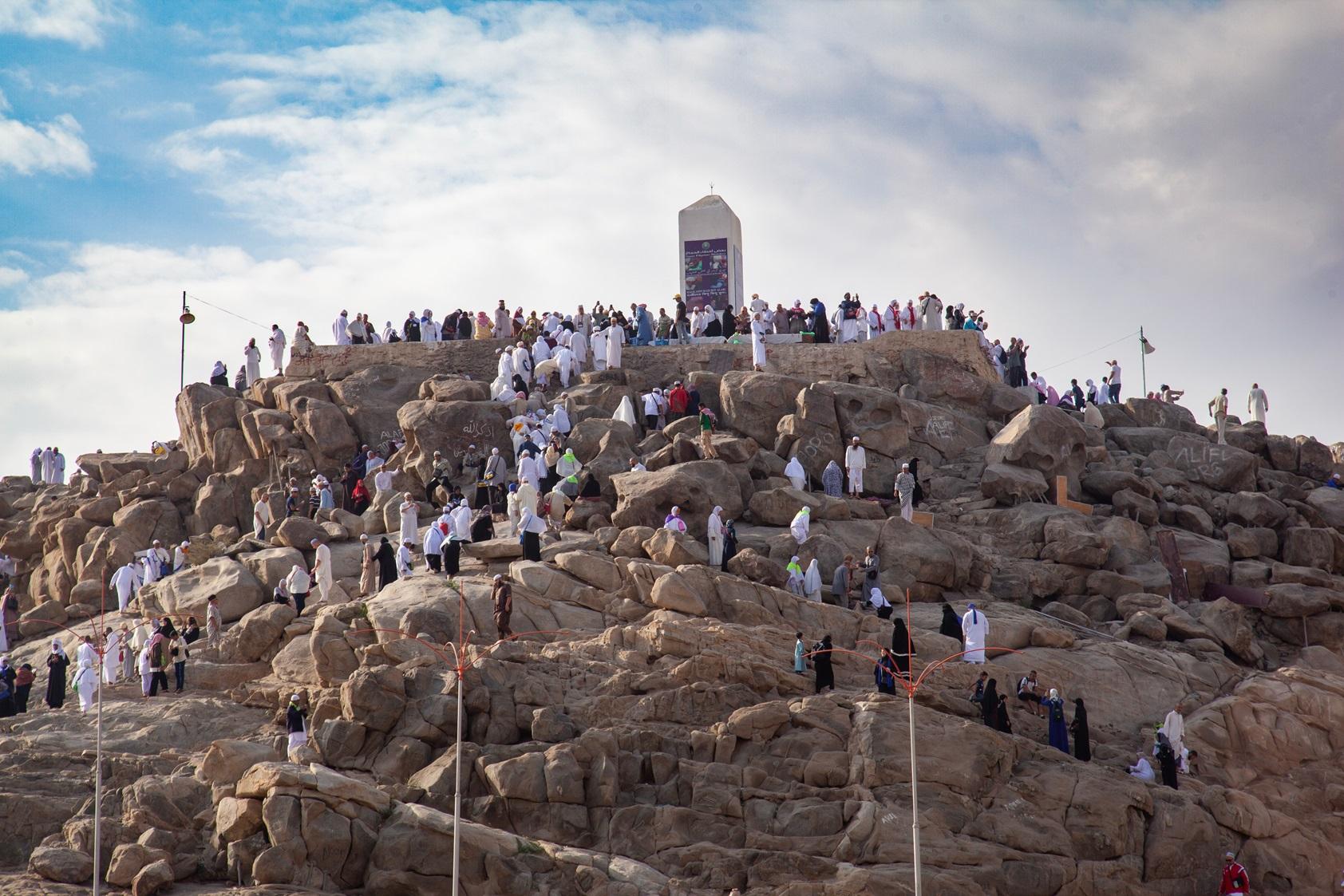
The Kabba, the direction of Qibla and the first house of worship built by Ibrahim and Ismail, is said to hold the Al-Hajaru al-Aswad (the Black Stone) from Jannah (Tirmidhi). Mount Arafat holds significance as the location where Prophet Muhammad (SAW) delivered his last sermon before passing.
Safa and Marwa are two hills where Hajar (RA) ran seven times in search of water for her son Ismail after being tested by Allah in the desert. Following this test, Allah blessed her with the miracle of the Well of Zamzam. Muslims reenact this event during Hajj by walking between the hills.
Eligibility to perform Hajj
Certain conditions must be followed to perform Hajj.
- Hajj is obligatory only for adult Muslims (both men and women). Children can also perform Hajj, but it is not obligatory for them.
- Elderly, sick, or physically challenged Muslims are also exempt from the obligation of Hajj.
- Muslims must be financially able to perform Hajj. Muslims with outstanding debt are exempt from Hajj until it's settled.
Things every Muslim should know about Hajj
Hajj consists of many rituals that are essential to follow to perform it. Every Muslim should know about these rituals.
- Muslims who are physically, emotionally and financially strong are obliged to perform Hajj at least once in their life.
- Hajj was first performed by Prophet Ibrahim (AS) and then by his son, Prophet Ismail (AS).
- Historically, before the current infrastructure around the Kaaba, Masjid al-Haram experienced flooding. Pilgrims would then swim around the Kaaba to perform Tawaf.
Step-by-Step Guide to Performing Hajj
There are almost several steps to performing Hajj. Here's a breakdown of the rituals:
- Make a sincere intention in your heart to perform Hajj for the sake of Allah (SWT).
- Enter the state of Ihram before carrying out the rituals.
- Perform Tawaf by circumambulating the Kaaba seven times. Missing a single circuit invalidates the Tawaf.
- Walk between the hills of Safa and Marwa, commemorating Hajar's (RA) devotion to her son, Prophet Ismail (AS).
- Before sunset on the 12th of Dhul Hijjah, have your hair cut or shaved. This completes Umrah.
- Rest and offer prayers.
- Re-enter Ihram for the remaining Hajj rituals.
- Head towards Mina, a town near Makkah, and stay for a day, performing all five daily prayers (Dhuhr, Asr, Magrib, Isha, and Fajr) along with the shortened Qasr prayer.
- Visit the plain of Arafah, where Prophet Muhammad (SAW) delivered his last sermon. The Day of Arafah is considered the holiest day, when God is especially close to believers and forgives sins.
- After sunset, depart Arafah and move to Muzdalifah. There, perform Maghrib and Isha prayers combined and spend the night in worship or rest.
- Perform Rami, the act of throwing stones at three designated locations in Mina.
- Perform Hady, the animal sacrifice on the 10th of Dhul Hijjah.
- After the sacrifice, shave or trim your head hair (men) or cut the tips (women).
- On the 10th of Dhul Hijjah, perform Tawaf al Ifadah. This involves circumambulating the Kaaba seven times, praying two rakats behind Maqam Ibrahim, drinking Zamzam water, and performing Saai.
- Saai is the obligatory walk between Safa and Marwa hills, done seven times. Each one-way trip is considered one circuit. Saai begins at Safa and ends at Marwah.
- Perform Rami (the stoning of the devil) again.
- Spend the entire night at Mina during the Days of Tashreeq. Failing to do so without a valid reason requires a sacrifice.
- Repeat Rami (stoning of the devil) again.
- Finally, perform Tawaf al-Wida, the Farewell Tawaf, marking the completion of all Hajj rituals and responsibilities.